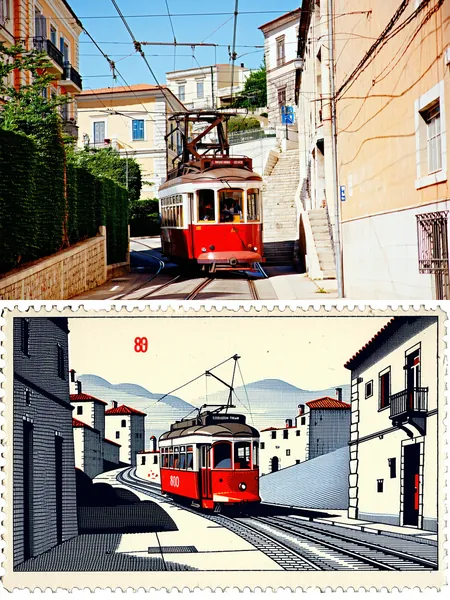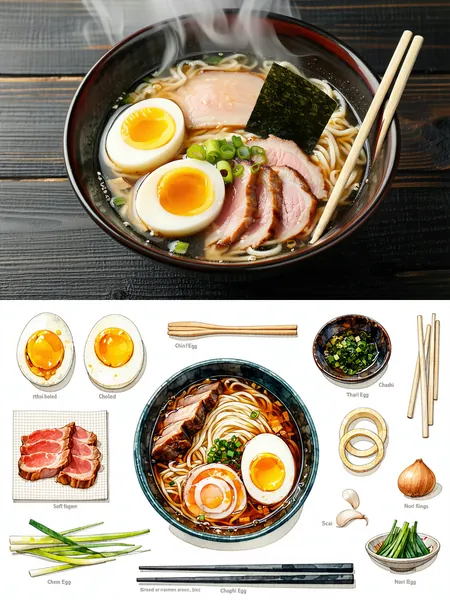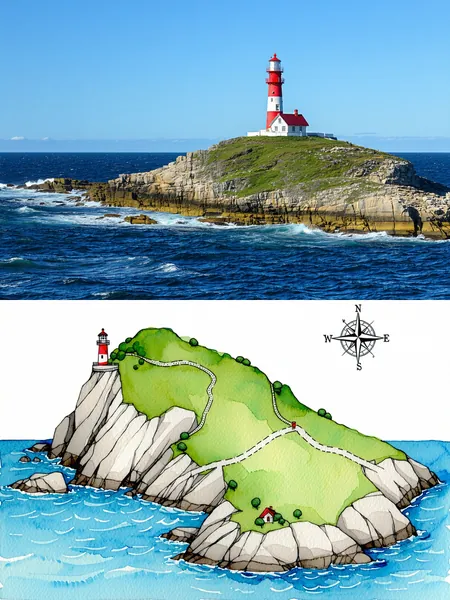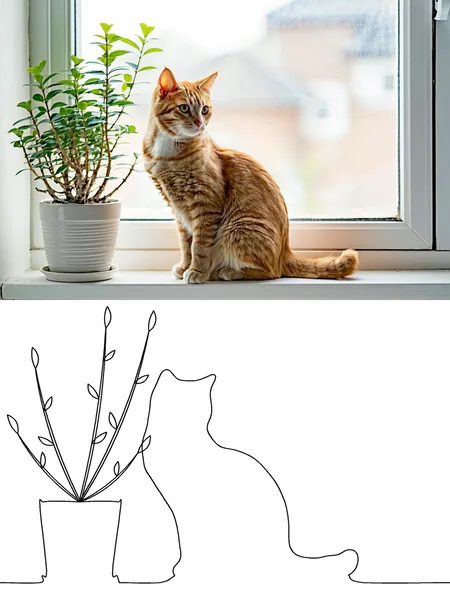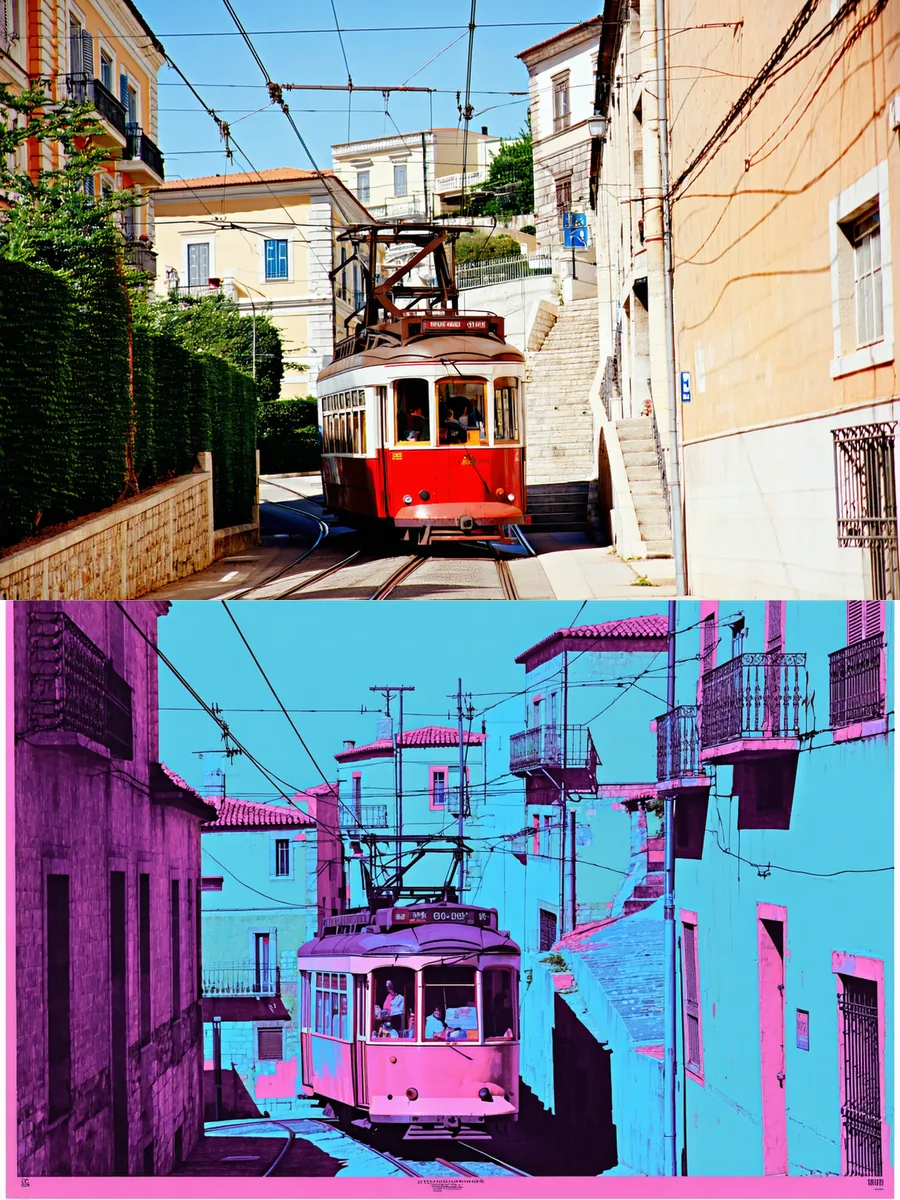
Example subject: a tram on a hillside street. Example images: both halves were AI-generated from the same scene description and composited per this site's rules, to show how the styles differ — not an actual result from a user's photo.
B2 · Paper & Print
Photo to Riso Two-Colour
Two spot-colour inks overprint with visible grain and slight misregistration, like an indie-press poster.
- Rule
- Only two inks plus their overlap colour; a small registration offset is required.
- Test
- A third colour should appear where the two inks overlap. Crop out the bottom half alone: you should still recognise the subject, and it shouldn't look like a filter.
- Suits
- Street scenes, portraits, still life. Often suggested for portrait and street scene photos.
- Avoid for
- Night scenes that depend on smooth gradients.
- Midline
- 50 : 50
Bottom-half prompt (1536×1024)
① Subject lock: recreate the exact scene in the reference photo — same main subject, same key objects, same left-to-right arrangement; the subject must stay recognisable.
② Medium: a risograph print using exactly two spot inks (fluorescent pink and blue), visible grain, slight misregistration between layers, overlaps producing a third colour, uncoated paper.
③ Rule: Only two inks plus their overlap colour; a small registration offset is required.
④ Exclusions: It must not look like a filter applied over the photo. Do not reuse the photo's pixels or photographic texture. Remove watermarks, logos and any text that is not part of the scene.
⑤ Output: one landscape 3:2 image at 1536×1024, full bleed, no border; keep the bottom-right corner free of text and key details.