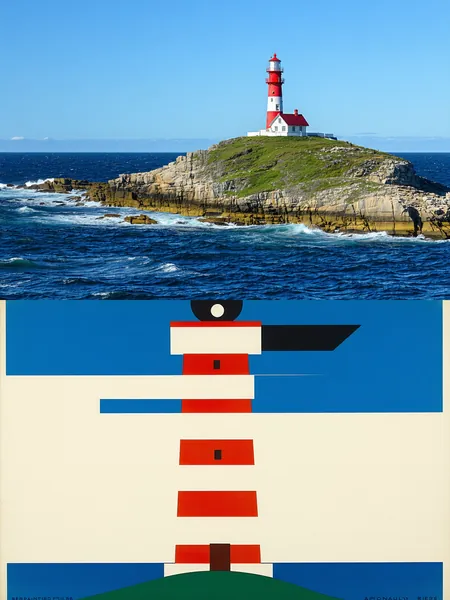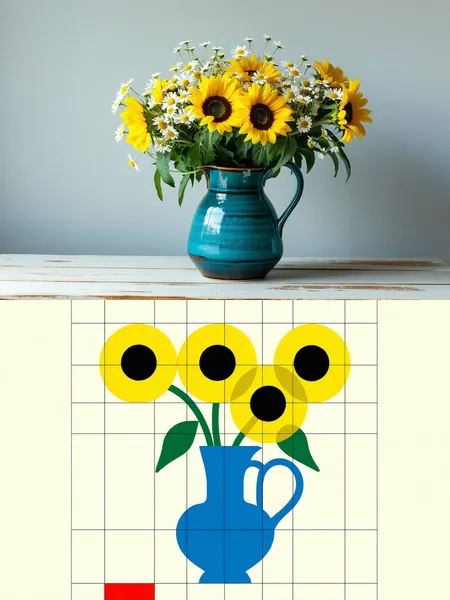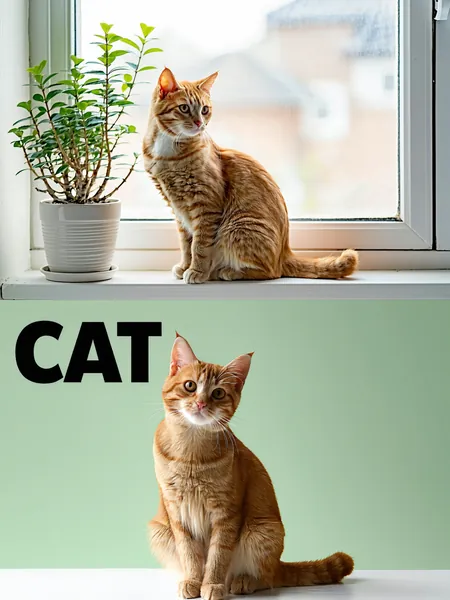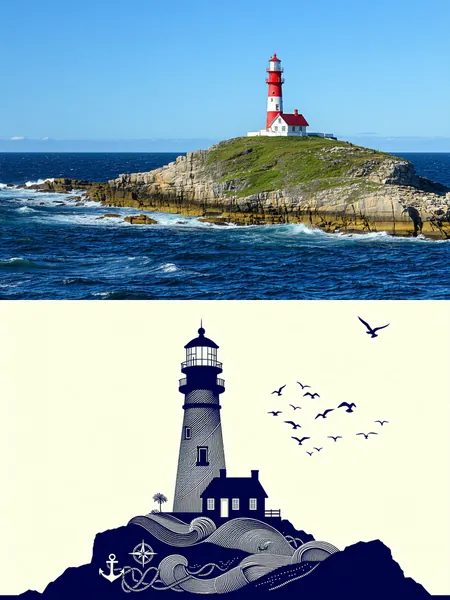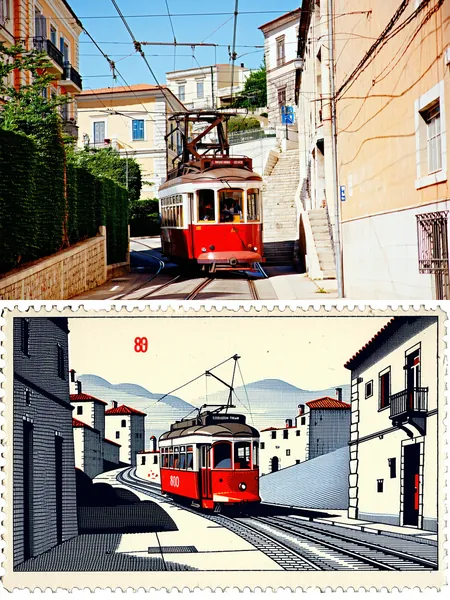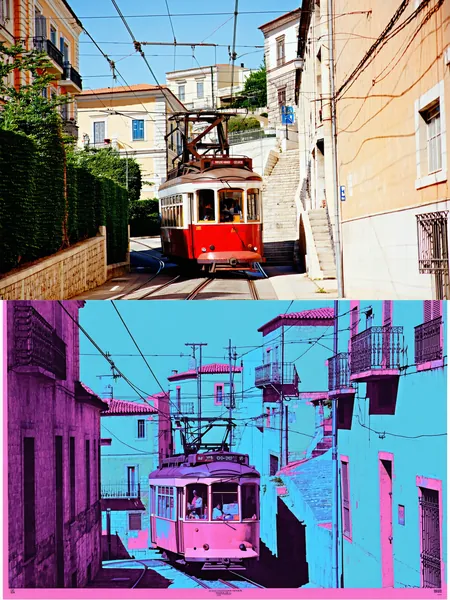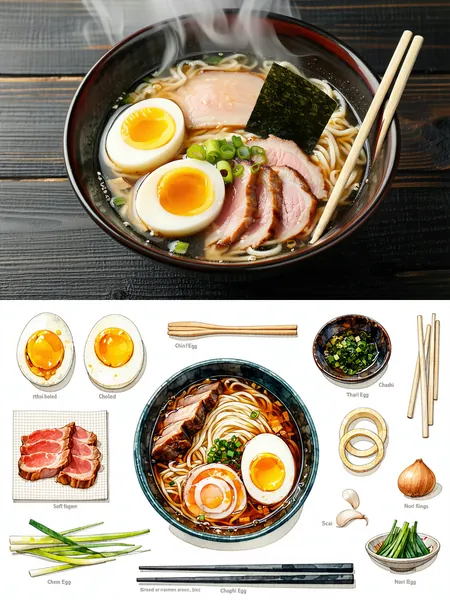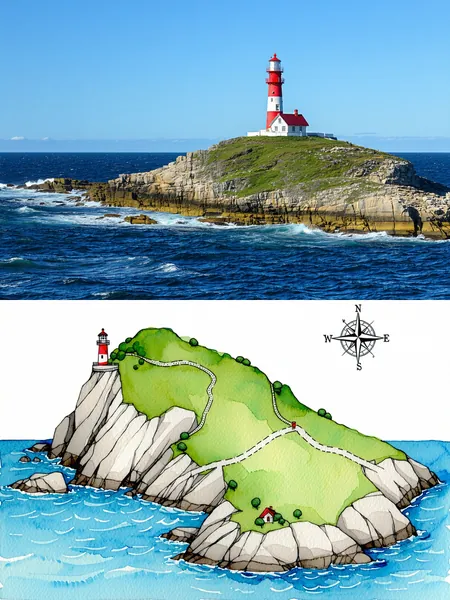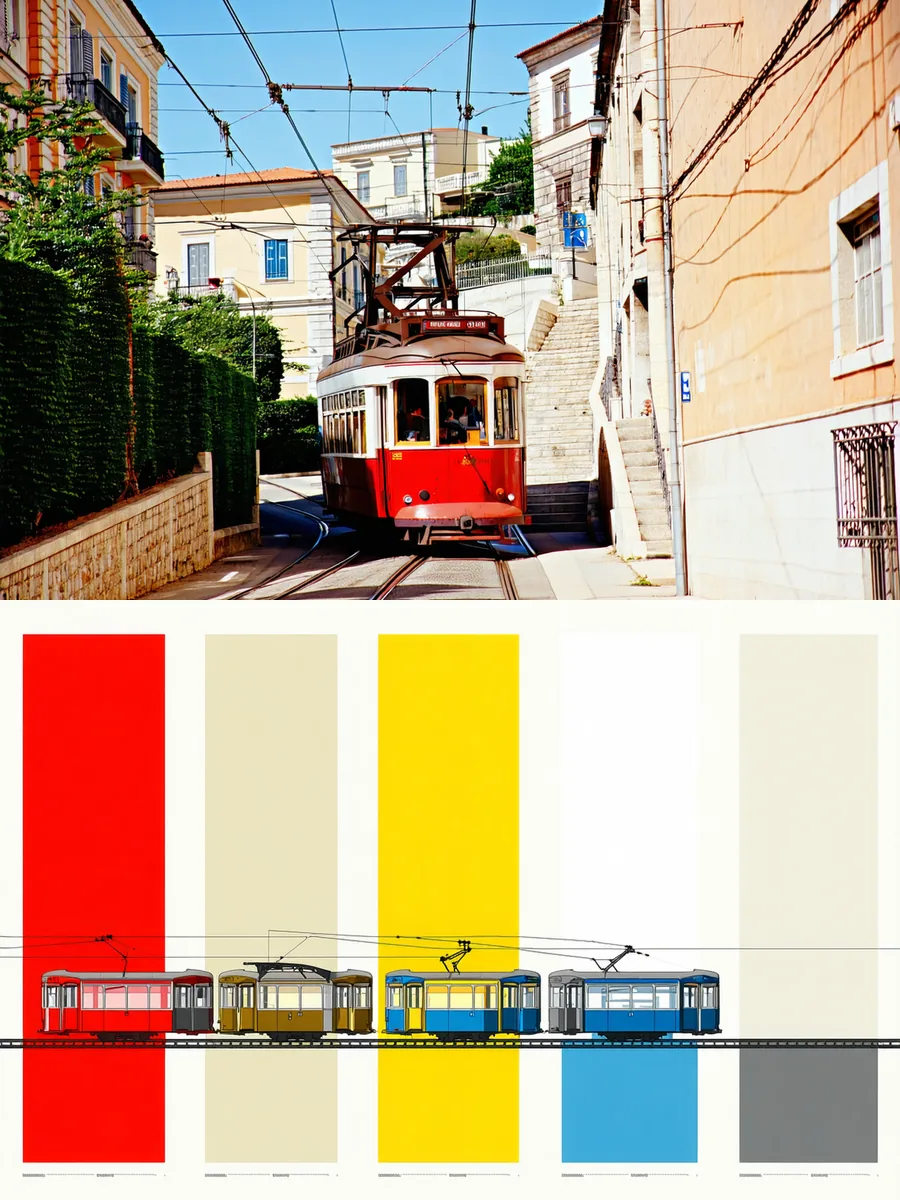
Example subject: a tram on a hillside street. Example images: both halves were AI-generated from the same scene description and composited per this site's rules, to show how the styles differ — not an actual result from a user's photo.
A1 · Graphic & Symbol
Photo to Visual DNA
The photo gets decoded into a swatch palette, geometric primitives and a small schematic — like a page out of a brand guideline.
- Rule
- Only colours that actually appear in the photo, five swatches max; every shape has to trace back to something in the original.
- Test
- Looking at the bottom half alone, you should be able to count the swatches and point to what each shape came from. Crop out the bottom half alone: you should still recognise the subject, and it shouldn't look like a filter.
- Suits
- Photos with clear colour and clean outlines: buildings, products, street scenes, signage.
- Avoid for
- Flat, low-saturation fog or backlit silhouettes.
- Midline
- 50 : 50
Bottom-half prompt (1536×1024)
① Subject lock: recreate the exact scene in the reference photo — same main subject, same key objects, same left-to-right arrangement; the subject must stay recognisable.
② Medium: a brand identity sheet that decodes the photo: a 5-swatch colour palette sampled from the photo, the subject reduced to geometric primitives, a small schematic thumbnail and thin annotation lines on an off-white page.
③ Rule: Only colours that actually appear in the photo, five swatches max; every shape has to trace back to something in the original.
④ Exclusions: It must not look like a filter applied over the photo. Do not reuse the photo's pixels or photographic texture. Remove watermarks, logos and any text that is not part of the scene.
⑤ Output: one landscape 3:2 image at 1536×1024, full bleed, no border; keep the bottom-right corner free of text and key details.